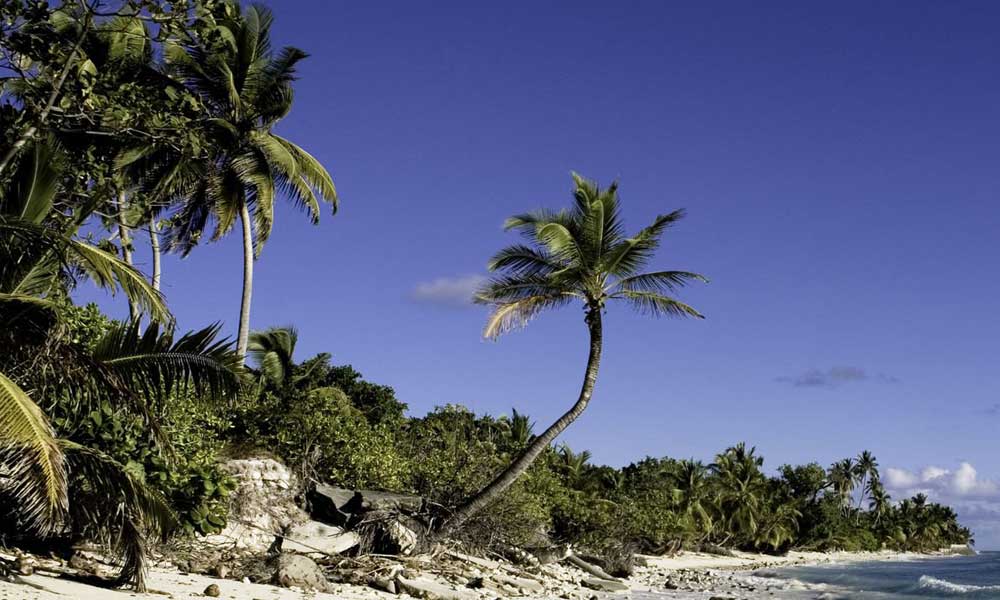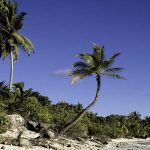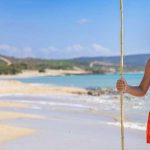
It’s no surprise that more and more people are planning a trip to the Cocos Keeling Islands, a remote Australian territory with powdery white sand and a shallow lagoon dotted with bright corals.
Sitting closer to Jakarta than Perth, this near-perfect circle of 27 islands is packed with beaches, marine life and – hence the name – coconut palms.
There’s so much to experience at ‘the Cocos’, from diving and kitesurfing to delicious Cocos Malay cuisine, so we know that planning a trip can feel a bit much.
That’s why we have created this one-stop Cocos Keeling Islands travel guide with everything you need to know to visit for the first time.
Quick Facts About the Cocos (Keeling) Islands
- The Cocos (Keeling) Islands only accept 144 visitors at any one time.
- Only two of the 27 coral islands are inhabited. The Cocos Malay people have a population of just 600 people.
- The islands were discovered in 1609 by the British explorer William Keeling.
- They’re surrounded by one of the world’s largest protected marine sanctuaries, measuring 467,054 square kilometres.
- Tourists adore the Cocos Islands for kitesurfing, snorkelling, diving and birdwatching.
Where Are the Cocos (Keeling) Islands?
The Cocos Keeling Islands, also known as the ‘Cocos’, are located in the Indian Ocean. Although they’re technically closer to Indonesia than mainland Oz, they remain a remote Australian territory along with nearby Christmas Island.
From Perth, it takes six hours and 25 minutes to reach the islands by air, stopping at Port Hedland en route. The islands are around 970 kilometres from Christmas Island, which is why many people choose to visit both destinations in a single run.
Why Visit the Cocos (Keeling) Islands?
Why visit the Cocos Islands? It’s a fair question, but the more you read about the Cocos, the more you’re likely to ask, “Why not visit?”
With flushed gold and red corals, uncrowded islands and calm lagoon waters, the Cocos are just as suited to kitesurfers and scuba divers as they are to families and couples wanting a laidback beach holiday.
These are some highlights for your Cocos Keeling itinerary:
● The Cocos have more than 600 species of tropical fish, plus manta rays, reef sharks, dolphins and turtles.
- There are 20 mapped dive sites across the islands.
- Snorkellers can reach corals directly from the shore or by boat.
- The islands have a strong Cocos Malay culture, with traditional food, small museums and an art gallery on Home Island.
- From May to June and September to October, southeasterly winds create consistently good kitesurfing conditions.
- There are two surf breaks (the Spot and the Shack).
- Birdwatching is popular, with 39 resident bird species and 150+ recorded overall, from vagrant shorebirds to megabirds.
How to Get to the Cocos (Keeling) Islands
From Christmas Island or Perth, it couldn’t be easier to reach the Cocos Islands Australia.
As we explain in our detailed guide on how to get there, QantasLink operates all flights to and from the Cocos. You can fly direct (with a brief operational stop) from Perth or take a connecting flight via Christmas Island.
1. Direct flight from Christmas Island
If you’re already living it up at Christmas Island, you’re only looking at a direct flight of 1 hour and 35 minutes to the Cocos Islands.
The flight (QF 361) departs Christmas Island every Monday at 2:45 pm.
2. Direct through-flight from Perth
The easiest way to reach the Cocos Keeling Islands from mainland Australia is to take the direct through-flight from Perth.
The flight (QF 363) departs every Friday at 9:25 am. It takes 6 hours and 25 minutes to reach the Cocos.
Don’t be concerned when you make a brief landing at Port Hedland en route. This is just an operational stop, so passengers are not required to disembark, and you’ll be back in the sky in no time.
3. Connecting flight (via Christmas Island) from Perth
The final way to reach the Cocos from Perth is to take a connecting flight via Christmas Island.
The flight (QF 361) departs every Monday at 9:25 am. As well as making an operational stop at Port Hedland, it has a 50-minute stopover at Christmas Island. Therefore, the journey takes a little longer: 7 hours and 55 minutes.
The direct through-flights and connecting flights via Christmas Island are, unusually, pretty much the same price.
Best Time to Visit the Cocos (Keeling) Islands
Unfortunately, you can’t pick just any old date to visit the Cocos Keeling Islands and expect to arrive to blissful sunshine and blue skies.
Any detailed Cocos Keeling Islands travel guide must mention that the islands have a volatile tropical climate. The year is also divided into distinct dry and rainy seasons:
The dry season is from August to February. This is the best time to visit the Cocos because the weather is usually consistently warm and dry. As you might expect, it’s also the busiest tourist season. However, tourist numbers are conveniently capped at 144 people at any one time.
The rainy season is from March to July. The higher rainfall can make your trip more unpleasant. Plus, water-based tours are more likely to be cancelled at the last minute when the visibility is poor. The highest rainfall is in April, so it’s best to avoid this month altogether.
Take note of these holidays, too:
It’s not just the rainy and dry seasons that you need to be aware of. Public holidays (in the Cocos or mainland Australia) can impact flight and accommodation availability, as well as the restaurant opening hours on the island.
- Australia school holidays: This is a top time for a Cocos family holiday, so competition is high for accommodation and flights.
- October to December: The annual red crab migration on Christmas Island can cause the flights connecting via Christmas Island to sell out.
- December and January: Christmas and New Year’s celebrations are popular travel times.
- Ramadan (varied dates from February to March): Hari Raya Puasa, celebrating the end of Ramadan, is a popular event to watch on Home Island, making it a busy time to travel.
Where to Stay on the Cocos (Keeling) Islands
Choosing where to stay on the Cocos Keeling Islands is another important decision. Remember, the visitor numbers are capped, so there are only 144 beds for tourists.
If you’re at all picky about where to stay, you’re going to need to book as early as possible to get the best pick of the Cocos accommodation options.
West Island
West Island, also home to the Cocos Island Airport, is the most popular place to stay at the Cocos. For one, it’s easy to reach from the airport, and on top of that, it has the largest selection of hotels and restaurants.
Top Hotels on West Island
- The Breakers – $340 per night
- Cocos Cottages – $430 per night
- Waves Oceanfront Accommodation – $595 per night
Home Island
Home Island, as you might have gathered from the name, is where the majority of the Cocos Islands population lives. It’s much quieter than the West Island, mainly because life here is less about tourism and more about the everyday life of the locals.
Therefore, the island has fewer tourist restaurants and hotels. It’s a good place to escape the crowds of West Island and appreciate just how important religion and tradition are to the Cocos Malay people.
Top Hotels on Home Island
- Oceania House – $275+ per night
- Cocos Kampong Homestay – $260+ per night
Best Things to Do on the Cocos (Keeling) Islands
There are so many things to do at the Cocos Keeling Islands, whether you picture yourself spending a good chunk of the day in the water, clocking in some serious beach time or sampling as many coconut crepes as humanly possible.
A huge part of the Cocos Keeling tourism is the spectacular hard and soft coral reefs in the lagoon (check out our snorkelling and diving guide for the full scoop on the best spots and tours). However, there’s plenty to do on land too, whether it’s visiting museums, happy hour at the West Island bar or playing a round of golf.
Here are just eight of our favourite things to do:
1. Take the ferry to Direction Island
This one’s a must, and it’s as cheap as chips at $5. Every Thursday and Saturday, ferries depart for Direction Island from West Island and Home Island.
Picnic in hand, you can beeline for Cossie’s Beach, backed by coconut palms and pondoks (shaded picnic areas). The lagoon here is a pretty irresistible shade of turquoise and dotted with corals, so reef shoes, fins and snorkels will also come in handy.
On dry land, there’s a heritage trail where you can learn about the World War I Battle of Cocos. Otherwise, set your sights on snorkelling at ‘the Rip’, a drift snorkel that’ll carry you along at a sure pace.
2. Go snorkelling at Trannies beach or the lagoons on West Island
You simply cannot visit the Cocos without at least one good snorkel. If you’re not keen on the idea of tackling Direction Island’s ‘the Rip’ from the beach, booking a local snorkelling tour (by boat or motorised canoe) is a good backup.
Pulu Maraya is another popular snorkelling spot at the Cocos, accessible from Scout Park on West Island. It has all your typical colourful fish, like butterfly, angel and parrot fish. Alternatively, try Trannies Beach at the north of West Island or the lagoons at the south for if you’re visiting the Cocos with kids.
3. Book onto a scuba diving tour
Prefer scuba diving to donning a basic snorkel mask and fins? You’re in a good place for it. The Cocos diving scene is immense, with 20 mapped dive sites and an average visibility of 25 metres.
If luck’s on your side, you can spot mantas, reef sharks, octopus and turtles, as well as nudibranchs. The Cocos have just under 100 species of hard and soft coral, too.
4. Try kitesurfing at the lagoon
The calm, turquoise waters of the lagoon aren’t much of a giveaway, but from May to June and September to October, the Cocos Keeling Islands become quite the playground for kitesurfers. During this stretch, trade winds consistently hit 15 to 25 knots.
Those winds, combined with the warm, shallow water of the lagoon, should be enough persuasion to pack your kitesurfing kit (as priority baggage, ideally). Alternatively, there are two Cocos kitesurfing tour operators that can arrange full-blown kitesurfing holidays or standard lessons.
5. Visit Home Island to experience the Cocos Malay culture
There are regular ferries between West Island and Home Island, making it easy to race there to try your hand at basket-weaving or sea salt making.
Don’t forget to take a look around Oceania House, a six-bedroom heritage mansion built by George Clunies-Ross in 1893 and later visited by Queen Elizabeth II in 1954.
The Home Island (Pulu Cocos) Museum is another worthwhile stop. It has a full rundown on the islands’ history since 1826, from world wars to the stories of Oceania House.
6. Take a cooking class on Home Island
What’s a greater souvenir than a recipe that you can take back home? Enrol yourself on a cooking class at Home Island to perfect traditional dishes like beef rendang, coconut rice and coconut crepes.
7. Go island-hopping around the atoll
There are 27 islands to see at the Cocos, so if you want to pack as many into one day as possible, you could hire a boat or take a motorised canoe tour around the atoll. This is your chance to get to those remoter, less-visited spots or ask the guide to check out specific areas like the sea turtle grazing spots.
8. Get into birdwatching mode
Just as tourists come to the Cocos to eat and lounge on the sands, birds come to the Cocos to replenish their fat reserves and escape winter in the Northern Hemisphere. The island is visited by vagrant species from Asia, Europe and Africa, but it also has a number of resident species that you’d never see back home, like the Cocos buff-banded rail.
Keep your eyes peeled around Direction Island and Horsburgh Island for the Cocos Buff-banded Rail, and enlist the help of a local tour guide to spot egret, western reef heron and green junglefowl around the lagoon.
How Long Should You Stay?
For most tourists, five to seven days is the right amount time for your Cocos Keeling itinerary.
However, if you’re not short on time, it’s never a bad idea to treat yourself to a longer stay.
Many people decide to split a two-week holiday between the Cocos and nearby Christmas Island, which is known for its thick rainforest and annual red crab migration. Deciding between Cocos vs Christmas Island is hard, so why not do both?
5–7 Day Suggested Itinerary
To save you the time and hassle of sorting through volumes of travel articles, we’ve planned out an easy 5–7 day itinerary for the Cocos Keeling Islands.
This itinerary is based on the idea that you’ll arrive on the direct through-flight from Perth on a Friday. So, if you take the Monday flight to the Cocos, just remember that the ferries to Direction Island only run on Thursdays and Saturdays.
- Day 1: After arriving at the airport, check in, grab your groceries (the West Island supermarket shuts at 3pm) and grab a map from the West Island visitor centre before 5pm. You could watch the sunset at the beach or go to the Cocos Club for celebratory first-night drinks before getting dinner at Salty’s or Tropika.
- Day 2: Picnic in hand, take the ferry to Direction Island at 9:30 am for a day on the sand. Go snorkelling at the Rip or the calmer bommies near the shore, and wander around the heritage trail if it’s not too hot. The return ferry is at 3.30pm, and it’s pizza night at Salty’s on West Island – how handy!
- Day 3: The ferries don’t run on Sundays, so now’s a good time to book yourself onto an island-hopping tour by motorised canoe. It’s a top way to get off the beaten track and see all of the islands around the atoll.
- Day 4: Take the ferry to Home Island to learn more about the local Cocos Malay culture. You could tour Oceania House, take a cooking class or learn how to weave baskets and make sea salt. The Home Island museum is also a solid introduction to the island’s history.
- Day 5: So far, you’ve done a lot of travelling, so day five is a good time to stay on West Island. A rental car or bicycle will help you to reach calm snorkelling spots like Trannies Beach or the lagoons at the south side of the island.
- Day 6: At the Cocos, there’s no such thing as spending too much time in the water. Try some of the snorkelling spots further afield by booking onto a snorkelling day tour or sign up for a scuba diving tour to visit some of the 20 dive sites.
- Day 7: Kitesurfing, golf or visiting the Wild Coconut Discovery Centre are all good ideas for your final day at the Cocos Keeling Islands.
Food, Restaurants & Supplies
Knowing where to eat is another key consideration at the Cocos. There’s a grand total of three restaurants on West Island and two restaurants on Home Island, so you will often need to visit the restaurant in advance and write your name on the chalkboard outside to reserve a table.
Traditional Cocos-Malay-inspired dinner buffets are the go-to at the Cocos Islands restaurants, which is handy if you’re ready to get stuck into dishes like ayam begana (spicy chicken dish), satay skewers and nasi goreng berkat (fried rice).
The main thing to note about the restaurants on the Cocos Islands is that the opening hours vary by season. The Cocos Keeling Islands Visitor Centre on West Island has the up-to-date schedule, so make sure to check it out if you don’t want your tummy to rumble at the most inopportune times (mid snorkel, for example).
Pre-Ordering Food Boxes
Many tourists opt to order a convenient food box containing fresh fruit and veg, eggs, yoghurt and baked goods for pick-up from Salty’s Grill & Bakery on West Island.
This is a good idea for your arrival because the West Island supermarket closes at 3pm; if your flight is delayed, you might not be able to get there in time.
Boxes can be ordered on the Cocos Island Collective website.
Food Shops on the Cocos Islands
- Cocos Cooperative, West Island: This is West Island’s only supermarket. It’s open until 3pm and closed on Sundays.
- Shamroks Supermarket, Home Island: This is Home Island’s only supermarket. It’s open seven days per week.
Restaurants on West Island
- Salty’s Grill & Bakery: Located at the airport, this window-style eatery has themed food nights three times per week. It also serves café-style dishes every morning except Sunday. If you’re ever craving a late-night snack, there is a 24-hour fridge with snacks and cold drinks. Food boxes with fresh produce and baked goods can be pre-ordered for pick-up.
- Surfer Girl Restaurant & Brewery: This is an oceanfront restaurant serving local and western dinner dishes. It’s closed on Tuesday, Wednesday, Saturday and Sunday.
- Tropica Restaurant: This restaurant serves Halal-certified local and Australian cuisine. It’s open seven days per week for all three main meals.
Restaurants on Home Island
- Sweet As Makan: Open at varied times every day, the restaurant serves local and Australian cuisine.
- Kampong Cafe and Restaurant: This restaurant-café serves coffee and local cuisine. On Wednesday, they run a traditional food buffet; ferries are arranged from West Island for the buffet.
Costs & Budget Breakdown
With our detailed costs and budget guide, you can get a good idea of exactly how much to budget for your trip to the Cocos Islands.
Here’s a helpful table with all the main costs you’ll need to think about:
| Trip Costs | Amount |
| Flights (return from Perth) | $1,100 – $1,300 |
| Accommodation (per night) | $260 – $600 |
| Coffee | $10 |
| Main meal | $20 – 40 |
| Ferries | $5 |
| Snorkelling and diving | $250 – 300 |
| Cooking class | $150 |
Getting Around the Islands
One reason why the Cocos Keeling Islands tourism is booming so nicely is that getting around is so easy.
- Walking: West Island and Home Island are walkable for the most part. The only thing is, the climate is hot and humid, so you might not want to walk far.
- Car: Car rentals are available on West Island. As the island is 10 kilometres in length, renting a car helps you to explore the far ends of the island. Car rentals are limited, so it’s always best to check the availability well in advance.
- Bicycles and electric bicycles: Bicycles can be hired from local bicycle operators.
- Ferries: Ferries run between West Island and Home Island, as well as between West Island or Home Island and Direction Island. They are very affordable.
- Buses: Local bus services run between the West Island settlement (outside of the Cocos Beach Motel) and the Rumah Baru ferry jetty. They depart 30 minutes before the ferry departure times (or 45 minutes before the late-morning ferry).
- Small boats: Small, self-drive singhies (for up to four people) can be hired from Cocosday Boat Hire if you fancy exploring the lagoon or island hopping to South Island or Pulu Maraya.
Is It Safe to Visit the Cocos Islands?
Everyone wants to feel safe when they’re away from home. Thankfully, the Cocos Islands are particularly great for that.
Crime on the Cocos Islands
The crime rate at the Cocos Keeling Islands is very low, particularly for serious offences. Petty crime, such as pickpocketing, is something to be aware of, just as you would on the streets of Perth or Sydney. However, it’s rare.
Natural risks on the Cocos Islands
When it comes to safety, the main thing to consider is the Cocos Islands weather. March to July brings an elevated risk of cyclones.
The sun is also strong; sun protection gear and SPF 30+ sun lotion are recommended.
Swimming at the Cocos Islands
It’s always worth being cautious when you’re using the ocean at the Cocos Islands. Although it’s unusual for them to be seen anywhere near the lagoons, because it’s so shallow, big sharks like hammerheads and tiger sharks do live in the deeper ocean.
There is also no coastguard at the Cocos, so it’s important to stick to the designated areas for swimming and be mindful of rip currents. Reef shoes will help to protect your feet from sharp corals.
Medical care at the Cocos Islands
There is one small health clinic and a pharmacy with limited supplies at the Cocos Islands. In total, the islands have one GP and four nurses. Therefore, people with serious injuries or medical emergencies will require a medical evacuation to Perth.
Animals at the Cocos Islands
There are no dangerous snakes or spiders at the Cocos Islands. However, mosquito-borne illnesses are carried. Therefore, you should wear mosquito repellent with more than 20% DEET.
Practical Tips Before You Go
- Check-in luggage has a weight limit of 30kg per person. If you need to bring more luggage, you can pay for excess baggage. However, because flights operate on a subject-to-load basis, it’s not always guaranteed to arrive on the same flight as you.
- If you have dietary restrictions, bring your own food because the supermarkets have limited supplies on the islands.
- Always pack your passport. If your flight is diverted to Malaysia or Indonesia, you’ll need it.
- Book your accommodation and flights at least 6 to 8 months in advance for the best prices and availability.
FAQs About the Cocos (Keeling) Islands
Our FAQ Mega Guide answers all of the most frequently asked questions about the Cocos Keeling Islands, but for now, here are the answers to a few questions that we hear again and again.
Do the Cocos Keeling Islands have phone reception?
There is no mobile reception on the Cocos Islands. However, most hotels offer a WiFi connection.
Are the Cocos Islands accessible?
The Cocos Islands are not fully accessible. The ferry is not wheelchair accessible. Furthermore, West Island swimming areas are only accessible by stairs.
Can you take food to the Cocos Islands?
You can take food to the Cocos Islands. However, fresh honey and produce, tomato, capsicum and seafood are not permitted to be brought onto the islands.