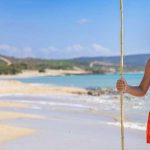
Knowing the best time to visit the Cocos Keeling Islands can be the difference between blue skies and big clouds or calm lagoons and choppy waters.
Considering that so many of the activities at the Cocos are centred around the water (snorkelling, diving, kitesurfing and island-hopping, for example), the weather couldn’t be more important.
We have put together this detailed guide to the best time to visit the Cocos Keeling Islands to help you understand the Cocos Keeling weather patterns and the best times to visit for watersports, wildlife encounters and other activities.
Couple this with our ultimate guide to the Cocos (Keeling) Islands, and you can look forward to arriving at the Cocos armed with pages of insider tips and all the knowledge you need for an effortless trip.
Quick Answer – The Best Months at a Glance
Want a quick answer to the best time to visit the Cocos (Keeling) Islands? We’ve got it.
The best overall months to visit the Cocos (Keeling) Islands are August to February. This marks the dry season at the Cocos, when cloudless days are the norm and the turquoise lagoons are busy with snorkellers, divers and canoes.
That being said, if you’re visiting the Cocos for one specific reason such as kitesurfing or birdwatching, the best months might be a little different.
You may want to pay attention to diving seasons, wind patterns and events like the turtle nesting season.
- Best for snorkelling: December to February combines calm waters with clear skies pretty much every day.
- Best for diving: December to February is also the best time for diving because the weather is dry and less windy, boosting visibility and preventing seasickness. However, June to November is prime time for spotting hammerhead sharks and manta rays, but you may face rougher conditions and dive cancellations.
- Best for kitesurfing: May to June and September to October is the trade wind season in the Cocos. Although rain is likely from May to July, there are winds of 15 – 25 knots almost every day.
- Best for wildlife: October to April is the best time for birdwatching, as this is when migratory birds such as godwits and sandpipers arrive from the Northern Hemisphere. Turtle nesting season begins in April, with hatchlings spotted scuttling towards the sea from July to October.
Budget-conscious tourists may benefit from visiting during the shoulder months of February and July, when the seasons are just changing.
These months bring lighter rains and less competition for flight tickets and accommodation, which, as we explain in our costs and budget guide, can cut costs massively. It’s a gamble, but it often pays off.
Cocos (Keeling) Islands Weather Overview
Despite being a remote Australian territory, the Cocos Islands are closer to Jakarta than they are to Perth. Therefore, they have a tropical savannah climate.
To simplify that even further, the Cocos Islands’ climate is best described as hot and humid with a dry and rainy season. The dry season often features long spells without rain, which makes it different from the tropical monsoon climate in countries like Malaysia and Thailand.
The Cocos Keeling dry season is from August to February. This is the best time to visit the Cocos Islands because it’s warm and dry. Watersports and other island activities run mostly without interruption, and visibility remains good for snorkelling and diving.
The Cocos Keeling rainy season is from March to July.
The islands receive an average annual rainfall of 2,000mm, and most of that arrives from March to May. Heavy rains can cause last-minute tour cancellations. Humidity levels also rise.
Despite the two very different seasons, the temperature in the Cocos hovers around 24 – 30 °C all year round. As a result, you’ll definitely want to pack plenty of lightweight, breathable clothes and come prepared with UV-protected sunglasses and SPF (at least 30+).
Thankfully, the Cocos Islands are known for being breezier than your typical tropical destination. This is especially true in the trade wind season from May to June and September to October.
Doldrums season (November to May) has calmer wind conditions, so it can feel hotter simply because there’s no breeze blowing from the southeast.
Month-by-Month Breakdown (January to December)
If you’re ready to book off your annual leave ASAP, you should find this month-by-month breakdown of the Cocos Keeling weather and climate particularly handy.
We’ve included the average temperature for each month according to the Australian Government Bureau of Meteorology’s handy rainfall chart so that you can get a real sense for what to expect from the Cocos Keeling weather – and, naturally, what to pack, too.
| Month | Mean temperature | Mean rainfall (mm) |
| January | 30 °C | 164 |
| February | 30 °C | 192 |
| March | 30 °C | 236 |
| April | 30 °C | 243 |
| May | 29 °C | 192 |
| June | 29 °C | 217 |
| July | 28 °C | 208 |
| August | 28 °C | 122 |
| September | 28 °C | 91 |
| October | 29 °C | 79 |
| November | 29 °C | 99 |
| December | 29 °C | 118 |
Best Time for Snorkelling & Diving
When it comes to snorkelling and diving, it’s more important than ever that the weather plays nice. If you’re going to the Cocos with kids, you don’t want to promise sightings of turtles, rainbowfish and little nudibranchs, only to see misty grey. There are 600+ fish species in the Cocos Keeling Islands Marine Park, so good visibility is key.
The best time for snorkelling and diving is the dry season from May to November, when the visibility is highest.
Scuba Diving
Technically speaking, scuba diving is possible all year round at the Cocos, with an average visibility of 25 metres. Cold water isn’t a problem, as the water temperature remains between 26 and 29 °C all year; a light rashie or 3mm wetsuit will do the trick.
However, the best time to go diving is really from May to November, the dry season.
This is because heavy rain brings poor visibility at the surface. If you’re diving near the shore (for example, at the lagoon), rain can push dirt and debris into the area. Wind often arrives along with rainstorms, causing choppy conditions and, for sensitive folks, sea sickness.
On the other hand, very light rain (such as that during the dry season) often boosts visibility by washing away surface particles.
Another important thing to note is that the Cocos Islands only have one dive school, Cocos Diving. They keep track of the monthly weather patterns, so the dive schedule often changes depending on the season and incoming storms. During high season, dive sessions often get booked up weeks or months in advance.
Snorkelling
Just like diving, snorkelling is a year-round activity on the Cocos Islands. However, during heavy rains or storms, snorkelling tours are often cancelled at the last minute due to choppy sea conditions.
The best time to go snorkelling is from November to February. The doldrums season from November to May brings lower swells. However, the rain builds fromMarch to May, affecting visibility at the surface.
Best Time for Kitesurfing
The kitesurfing season at the Cocos Keeling Islands is from May to June and September to October, the trade wind season.
Out of the two time periods, September to October is typically the driest and therefore the busiest for kitesurfing at the Cocos lagoon.
The Cocos Keeling windy season brings strong and steady southwest trade winds of 15 – 20 knots. There may be a few days where the wind settles down, but the Cocos wind patterns are known for being pretty reliable.
Every now and then, tropical cyclones can throw a spanner in the works and cause the wind patterns to shift. However, it’s rare.
Here’s another insider’s tip: kitesurfing gear can easily be hired at the Cocos, but if you want to bring your own, you should bring at least a two-kite quiver. You may also want to pack a spare bar, lines and a repair kit in addition to your usual kitesurfing gear because supplies are limited on the islands.
Wildlife Seasons
Coming to the Cocos to spy turtles, migratory birds or crabs, or perhaps all three? Then you’ll want to know the different wildlife seasons.
You never know, you might end up reconsidering the best time to visit the Cocos or even how long to stay.
Turtle Nesting Season
Turtle nesting season in the Cocos falls in April, which unfortunately just happens to be the islands’ heaviest month of rainfall. If you don’t mind waiting out the downpours, you’re likely to see the green and loggerhead turtles arriving and coming onto the dry land to nest.
Still, your chances of seeing turtles on land aren’t over if you decide to wait until later in the year. It takes some time for the turtles to hatch because there’s a 7 – 8-week incubation period. July to October is the prime time to see fresh hatchlings waddling towards the sea.
Birdwatching seasons
If birdwatching is one of your top priorities, the best time to visit the Cocos Keeling Islands is November to March.
This time period marks the arrival of migratory shorebirds on the East Asian-Australian, Indian and Western Paleoarctic flyways. If you’re lucky, you might spot Saunders’s tern, green junglefowl, intermediate egret and white-breasted waterhen.
Endemic species are also present on the islands all year round. This includes the Cocos buff-banded Rail, which is often spotted around Direction Island and Horsburgh Island.
Lagoon Life Cycles
Lagoon life cycles are also worthy of consideration. Manta rays, dolphins and fat hawksbill and green turtles can all be spotted year-round. However, the best time to see schools of hammerhead sharks and manta rays is from June to November.
Cheapest Time to Visit
Before you move on to the next step, which is how to get to the Cocos (Keeling) Islands, we must cover the cheapest time to visit the Cocos.
One trick for finding cheap flight tickets is to look at the shoulder months (February and July), which mark the transition between the dry and wet seasons. It’s a gamble whether it’ll rain or shine, but flight tickets are often much cheaper and finding accommodation is less competitive.
Demand for accommodation and flights remains high throughout the Cocos Keeling dry season from May to November.
In particular, the Australian school holidays (Christmas in particular) and the Christmas Island turtle nesting season throw flight availability – and therefore prices – into chaos.
The Cocos Keeling wet season is, of course, the cheapest time to visit overall, but it’s risky. Heavy rains can affect tour availability and – pun intended – cast a dark cloud over your trip.
Worst Times to Visit
It bears repeating that the worst time to visit this beautiful island destination is the Cocos Keeling wet season. However, this all does depend on your trip plans.
For example, if you’re coming to kitesurf your days away, then the worst time to visit will be the doldrums season (November to May), when the wind simply won’t blow hard enough.
Furthermore, if you’re keen to witness turtle nesting season or hatchlings scurrying to the ocean, you’re going to want to aim for the months of April for the former or July to October for the latter.
The Cocos Islands’ climate means that humidity levels remain high pretty much all year round, although you’re likely to notice the humidity climbing more during the wet season.
That all being said, monthly weather patterns can still vary from year to year, so you’re never guaranteed sunshine and clear skies. The longer you stay, the more shots you get at snorkelling, scuba diving and birdwatching.
Seasonal Travel Tips
- Book your tours as early as possible if you’re visiting from November to February. There are limited tour operators at the Cocos Keeling Islands, and the demand is high.
- Don’t forget mosquito repellent, especially during the wet season. Mosquitos are more prevalent in the wet season, but no matter the time of year you visit, we always recommend wearing repellent with at least 20% DEET.
- Pack lightweight, breathable clothes to keep cool in the tropical savannah Cocos Keeling climate. A raincoat is also a good idea if you’re planning to visit during the wet season or shoulder months.
- Pack modest clothes if you plan to visit Home Island. As we share in our Home Island guide, the local population follows the Sunni branch of Islam.
FAQs
What’s the best time of year to go to the Cocos?
The best time of year to go to the Cocos is from November to May, the dry season. However, if you’re heading to the Cocos for kitesurfing, the best time of year to visit is the trade wind season in May to June and September to October.
What are the best months for birdwatching at the Cocos?
The best months for birdwatching are November to March, when migratory and endemic birds are present. During this period, birds arrive from the East Asian-Australian, Indian and Western Paleoarctic flyways.
When can you see red crabs at the Cocos Islands?
The red crab migration on the Cocos Islands and Christmas Island usually begins in October or November. However, it only lasts for 1 – 2 weeks.
Is the wet season a bad time to visit the Cocos Islands?
The wet season brings heavy rains to the Cocos Islands. While there are still sunny periods, this can cause activities such as snorkelling or boat tours to be cancelled. However, if you don’t mind trying your luck, you can benefit from off-season ticket and accommodation prices.